Since the first week of October, many of us have been filling small Alabaster boxes at home with loose coins and spare bills. We’re wrapping up this fall’s Alabaster emphasis this Sunday, November 15, so it’s a good time to bring yours in.
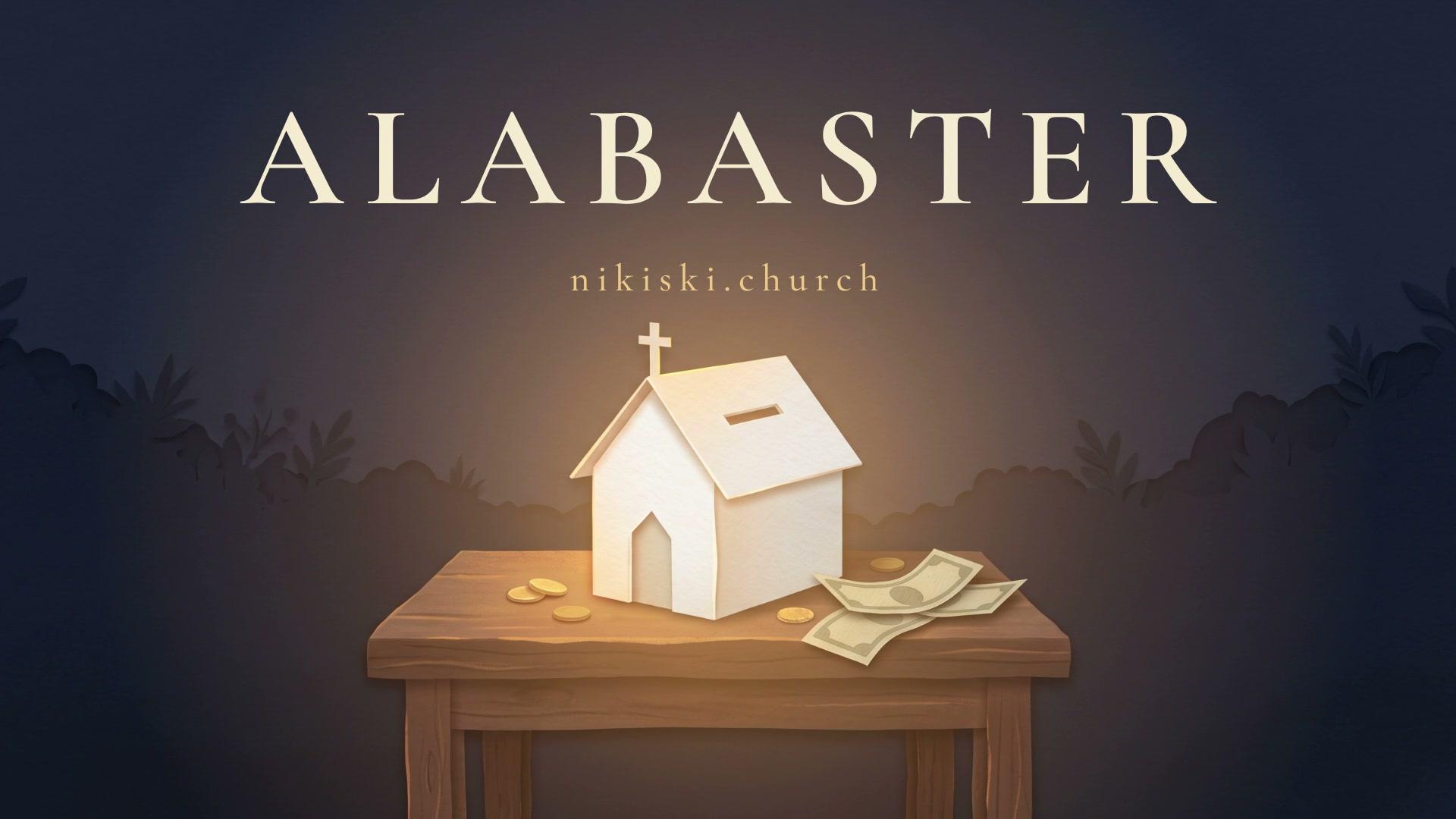
Adults, students and children alike, bring your box with you on Sunday morning and empty it into the little Alabaster church at the front of the sanctuary.
Where it comes from
A few days before the cross, a woman came into a dinner in Bethany carrying an alabaster jar of perfume worth about a year’s wages. She broke it open and poured all of it on Jesus. Some at the table called it a waste. Jesus called it a beautiful thing (Mark 14:3-9).
In 1949, the council of what is now Nazarene Missions International was looking for a way to pay for land and buildings for churches growing around the world. One of its members, Elizabeth Vennum, was asked for an idea, and on the train home she sensed God giving her one: let Nazarenes do what that woman did. Set aside the cost of something we want but don’t truly need, and give it instead. It is often said in six words: give up a want to meet a need. Alabaster has been part of the Nazarene story ever since.
What it builds
Alabaster gives a church around the globe a place to put down roots. The gifts help:
- Buy land or a building for a church
- Build a church or a parsonage
- Turn an existing building into a place to gather for worship
- Build homes for missionaries and buildings for Bible colleges
Where every dollar goes
All of it goes to the projects. The World Evangelism Fund, our tithe on the tithe, covers the administrative costs, so every dollar given to Alabaster becomes a place where people worship, heal and learn. In 2023 alone, Nazarenes gave $2.9 million through Alabaster.
This Sunday
- When: Sunday, November 15, during morning worship
- Where: The little Alabaster church at the front of the sanctuary
- Bring: Your Alabaster box, whatever is in it
Questions? Talk with Jan Darch or Butch Grosdidier, or text us anytime at 907-283-3632. To read more, see Alabaster on nazarene.org.